
Stage 1
Initial suction
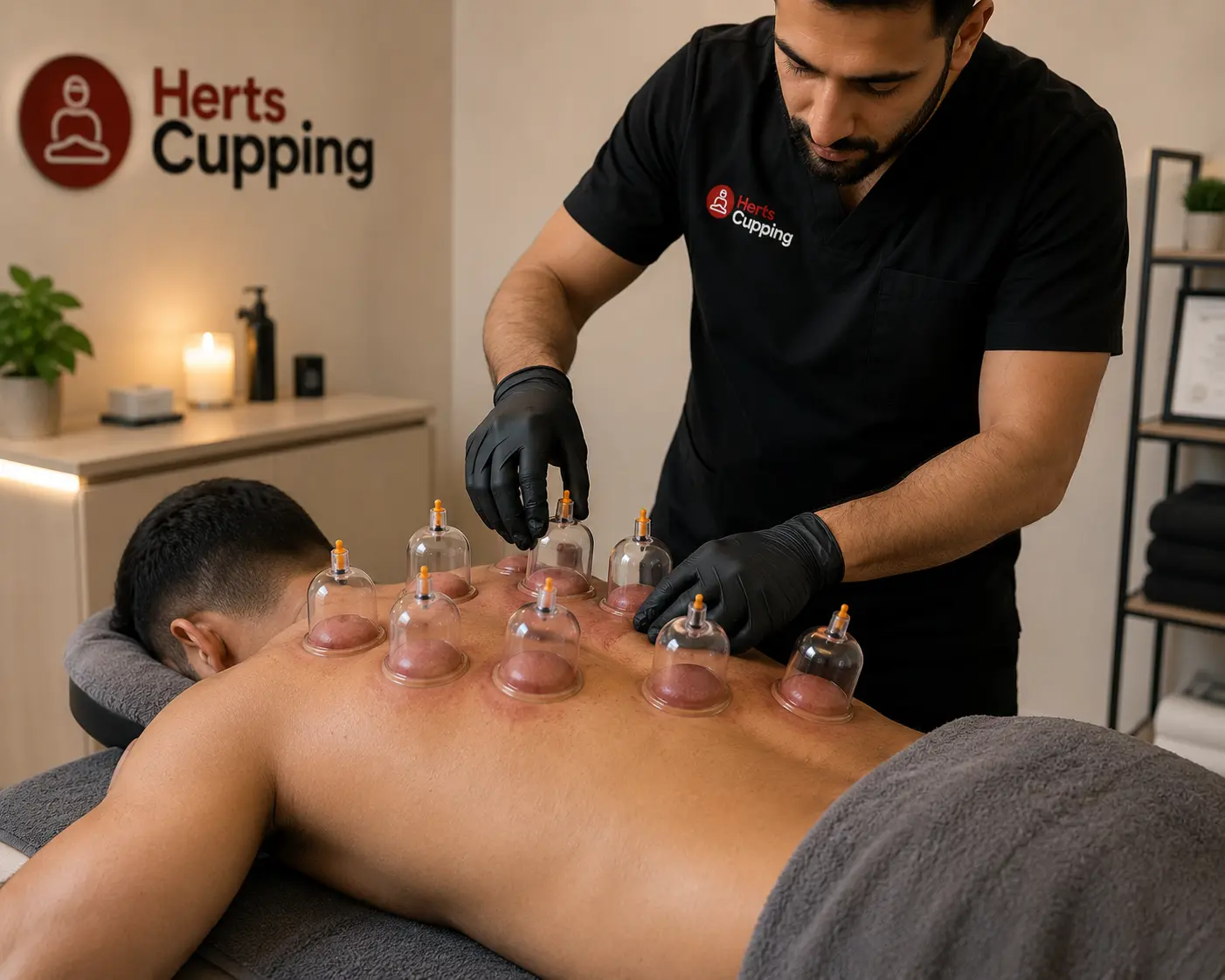
A cup is placed over the selected area to create controlled suction. This temporarily lifts the skin and superficial tissue and helps prepare the area for the next stage.
Hijama explained · wet cupping · blood cupping
Hijama is wet cupping, also called blood cupping. It is available to Muslim and non-Muslim clients, either on its own or alongside a wider recovery session. See exactly what happens and how it differs from dry or fire cupping.
Quick answer
A cup is first used to create suction on the skin. The cup is removed, very small superficial scratches are made in the skin surface, and the cup is reapplied so a small amount of blood can collect inside it.
That blood-removal step is what distinguishes Hijama from dry cupping and fire cupping. All three use suction, but only Hijama includes the superficial skin scratches and controlled blood-removal stage.
You may see Hijama described as wet cupping, blood cupping, bloodletting or blood letting. Wet cupping and blood cupping are the clearest terms for this treatment. Bloodletting is a much broader historical term, so it should not be assumed to mean the same technique in every context.
If you are researching why people choose it, see our Benefits of Hijama and wet cupping guide.
How it works
Understand the wet-cupping stages first, then compare Hijama with dry and fire cupping without repeating the same explanation across separate full-height sections.
How the treatment works
The mechanics are simple. The important part is how safely and appropriately they are used.
Stage 1
A cup is placed over the selected area to create controlled suction. This temporarily lifts the skin and superficial tissue and helps prepare the area for the next stage.
Stage 2
The cup is removed and small superficial scratches are made to the surface of the skin using a sterile single-use sharp. These are shallow and are not the same as a deep cut.
Stage 3
The cup is reapplied. A small amount of blood enters the cup. The cup is then removed, the skin is cleaned and the area is checked before aftercare is given.
The amount of blood is not a measure of whether a session “worked”. More blood is not automatically better, and we do not chase dramatic results.
Cupping is an umbrella term
Choosing between them should depend on why you are booking, not on which one sounds more intense.
Wet cupping
Suction, superficial scratches and a second suction stage. Often chosen for Sunnah practice, traditional wellbeing or because the client specifically wants wet cupping.
View Hijama sessionsSuction only
No scratches and no blood. Commonly used for muscular tightness and recovery, either on its own or within a broader Recovery session.
Read about dry cuppingGlass cups + heat
Heat is used briefly inside a glass cup to create suction before the cup is placed on the skin. It remains a dry method because there are no scratches.
Read about fire cuppingThe reason matters more than the number of cups
We keep those goals separate so the session stays realistic.
Many Muslim clients book because Hijama is established in authentic Islamic tradition and they want to practise it in a clean, professional setting.
Some clients choose wet cupping around the back, shoulders or legs when an area feels loaded or tight. If the presentation is mainly muscular, we may recommend combined muscle recovery work instead.
Active clients sometimes use Hijama as a standalone recovery choice or add it to manual therapy, IASTM and dry cupping when they want both approaches.
Some people book because they feel run down, heavy or simply want a traditional wellbeing treatment. Responses are individual and no particular result is guaranteed.
If your main concern is the process, blood, marks or whether it hurts, the first-time guide answers those questions before you decide.
Consultation, point selection and safety
You should know what is happening before each stage rather than being treated from a fixed routine.
We discuss why you booked, relevant health history, medication and whether wet cupping is appropriate that day.
Points are selected around the reason for your visit, established Sunnah guidance where relevant and practical treatment safety.
The cups are applied and pressure is adjusted to a level you can tolerate comfortably. Small superficial scratches are made and the cups are reapplied for the wet-cupping stage.
The area is cleaned and checked. We explain showering, training, hydration, marks and what to do if you have a concern.
Tell us before treatment
Please tell us about prescribed medication, anticoagulants or blood thinners, bleeding disorders, severe anaemia, uncontrolled chronic conditions, recent surgery or injections, active infection, fever, pregnancy, skin problems over the treatment area, and any history of fainting with blood or needles.
If symptoms are severe, unexplained, worsening, neurological, or linked to a known injury or medical condition, appropriate medical assessment should come first. A Sunnah practice still needs sensible screening and hygiene.
What you may notice
These are practical expectations, not diagnostic readings from blood colour or cup marks.
What actually comes out?
During Hijama, a small amount of blood is drawn through superficial scratches into the cup. The colour and consistency can vary between people, areas and sessions.
Traditional Hijama language often talks about stagnant blood or detox. People may use those terms to describe why they choose the practice. In modern medical terms, however, the appearance of blood in the cup is not a validated diagnostic test for toxins, organ health or disease.
We do not tell clients that dark blood proves a particular illness or that a larger volume means a better treatment. The purpose of the session is not to produce the most dramatic cup.
Marks and sensations
The suction usually feels like firm pulling or pressure. Tighter areas can feel more intense, but pressure can be reduced. The superficial scratches are brief and many first-time clients say they were milder than expected.
Circular marks can appear where cups have been used. They may range from light pink to darker red or purple and commonly fade over several days. Mark colour is influenced by the amount of suction, skin response and the area treated. It should not be used to diagnose an internal health problem.
Mild tenderness, tiredness or a light-headed feeling can occur after wet cupping. We give you time to sit up, drink water and make sure you feel settled before you leave.
Watch a real session
This is a real Herts Cupping treatment video, not stock footage. The video loads only when you choose to play it.
Trusted locally
See current feedback on Google.
Hijama sessions
Hijama is available to Muslim and non-Muslim clients. It can be booked as a standalone wet-cupping treatment or combined with a wider recovery session when wet cupping is part of what you want.
Every Hijama appointment includes consultation, tailored point selection, sterile single-use equipment and aftercare. We do not force every client into the same number of cups.
Useful for a small number of points, a focused area or clients who specifically want limited coverage.
Book Starter HijamaAllows a broader tailored point selection while keeping the session focused on the reason you booked.
Book Signature HijamaFor clients who want more extensive wet-cupping coverage across multiple suitable areas.
Book Advanced HijamaCommon questions
These are the practical questions clients ask most often. If your situation is more specific, message us before booking.
Most clients describe the suction as firm pulling or pressure and the superficial scratches as brief. Pressure is adjusted throughout the session and we explain each stage before it happens.
No. Dry cupping uses suction only. Hijama is wet cupping and includes small superficial scratches followed by a second suction stage.
A small amount of blood is drawn through the superficial scratches. Colour and consistency vary, but we do not use the blood or cup marks as a diagnostic test.
They commonly fade over several days. Skin response, cup pressure and the area treated all affect how visible the marks are.
You do not need to fast all day. Our clinic preparation guidance is to leave at least 2 hours without food before Hijama while continuing to drink water and stay hydrated. If delaying food is unsafe for you because of diabetes, medication or another condition, message us before booking.
We normally advise keeping the rest of the day lighter and avoiding strenuous training for around 24 hours, especially after a broader wet-cupping session.
No. Mark colour and the appearance of blood are not validated diagnostic tools. Concerning symptoms still need appropriate medical assessment.
Choose the coverage that seems closest to what you want. We still assess the areas first and do not use unnecessary cups simply because a package allows more.
Private clinic · St Albans
If you are unsure which Hijama option fits, message us before booking. We will give you a straight answer based on what you want from the session.